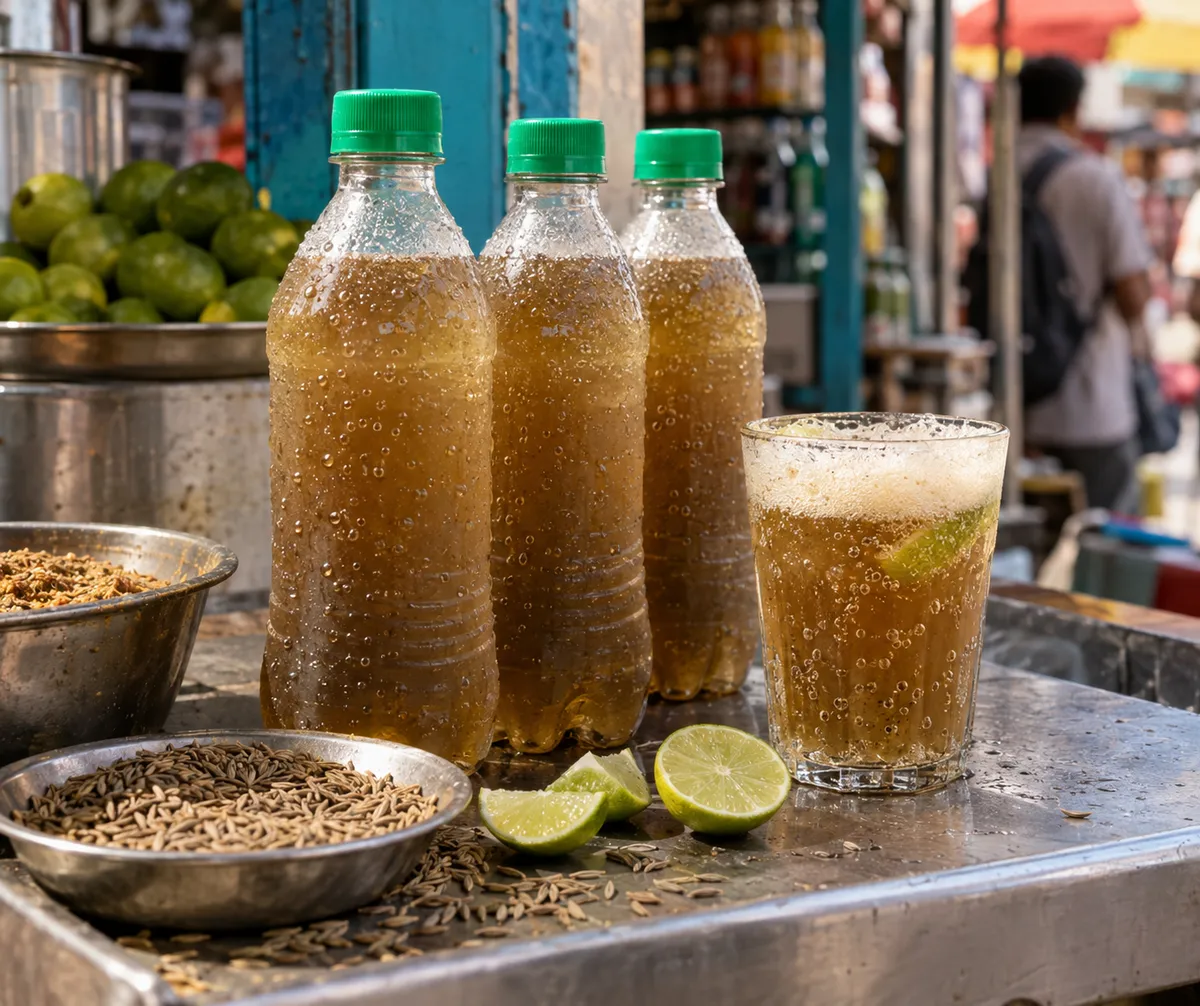
Cumin in a fizzy drink sounds like a dare. In India, it's a familiar taste, and it's now gaining ground against global cola brands. By the end of this piece, you'll know what jeera soda is, which brands to look for, and how to taste it with some context.
Per BBC reporting, cumin-flavoured sodas such as Lahori Zeera, Campa Jeera and Jeeru are capturing a bigger share of India's soft drinks market as demand for homegrown flavours rises. The BBC describes these "ethnic beverages" as challengers to Coca-Cola and Pepsi in the mass-market segment.
What Jeera Soda Actually Is
"Jeera" and "zeera" are two spellings of the same word: cumin. Jeera soda is a carbonated drink flavoured with that spice, so you get fizz with an earthy, savoury edge rather than pure sweetness.
If you've never tasted it, expect something closer to a spiced refresher than a cola. The flavour is meant to feel familiar to people who grew up with cumin-based drinks and street-style sodas. That familiarity is the heart of the story.
The Brands to Know
The BBC's coverage names three players:
- Lahori Zeera, which the BBC's reporting frames as a kitchen experiment that grew into a roughly $120m brand.
- Campa Jeera, a cumin entry from the Campa name.
- Jeeru, another cumin-flavoured fizzy drink in the category.
If you're in India, trying all three side by side is the simplest way to see how each handles the spice: stronger or softer, saltier or sweeter. That's a tasting comparison to run yourself, since the specifics of each recipe aren't something I can vouch for here.
Why It's Catching On
The BBC points to three forces reshaping the carbonated drinks market.
Nostalgic flavours
Cumin drinks tap into taste memories. Homegrown flavours are perceived by many consumers as more authentic, and in some cases healthier, per the BBC's reporting. That perception, whether or not it holds up for a given bottle, clearly influences what people reach for.
Low prices
The reporting highlights low pricing as a driver in the mass-market segment. The competition is about who wins the everyday, small-purchase shopper, not who has the fanciest bottle.
Wider distribution
A drink can't win if you can't find it. Broader availability is part of how these local brands are competing with the cola giants on their own turf.
The BBC also notes that online demand for cumin sodas has surged, and that India's non-alcoholic beverages market is expanding fast. Together, that suggests the trend is about more than a novelty. It's a shift in what mainstream shoppers want from a fizzy drink.
How to Taste It Like You Mean It
A few practical ideas, based on how this drink is meant to be enjoyed:
- Drink it cold. Fizzy, spiced drinks generally taste sharper and cleaner chilled. That's my advice, not a brand instruction.
- Pair it with salty or fried snacks. The savoury note of cumin plays well with that kind of food. Again, this is a suggestion from me.
- Compare against a cola. Taking a sip of each back to back shows exactly why people call this an alternative rather than a copy.
- Try more than one brand. The category is new enough that each bottle may surprise you.
What the Rise Says About Place
Food-led travel often means seeking out dishes tied to a region. Jeera soda is a small example of the same idea in a bottle: a flavour rooted in how people in India already eat and drink, now sold at a mass scale. When you travel there, the soft drinks aisle or a roadside cooler is as good a place to read local taste as any menu.
The BBC's reporting also raises the question of whether desi sodas can go global next. That's an open question, not an established fact, but it's easy to see why people are asking.
The Takeaway
Next time you're choosing a drink in India, skip the default cola for one round. Pick up a cumin soda, drink it cold with something salty, and notice what a flavour the country already knows looks like when it's carbonated.