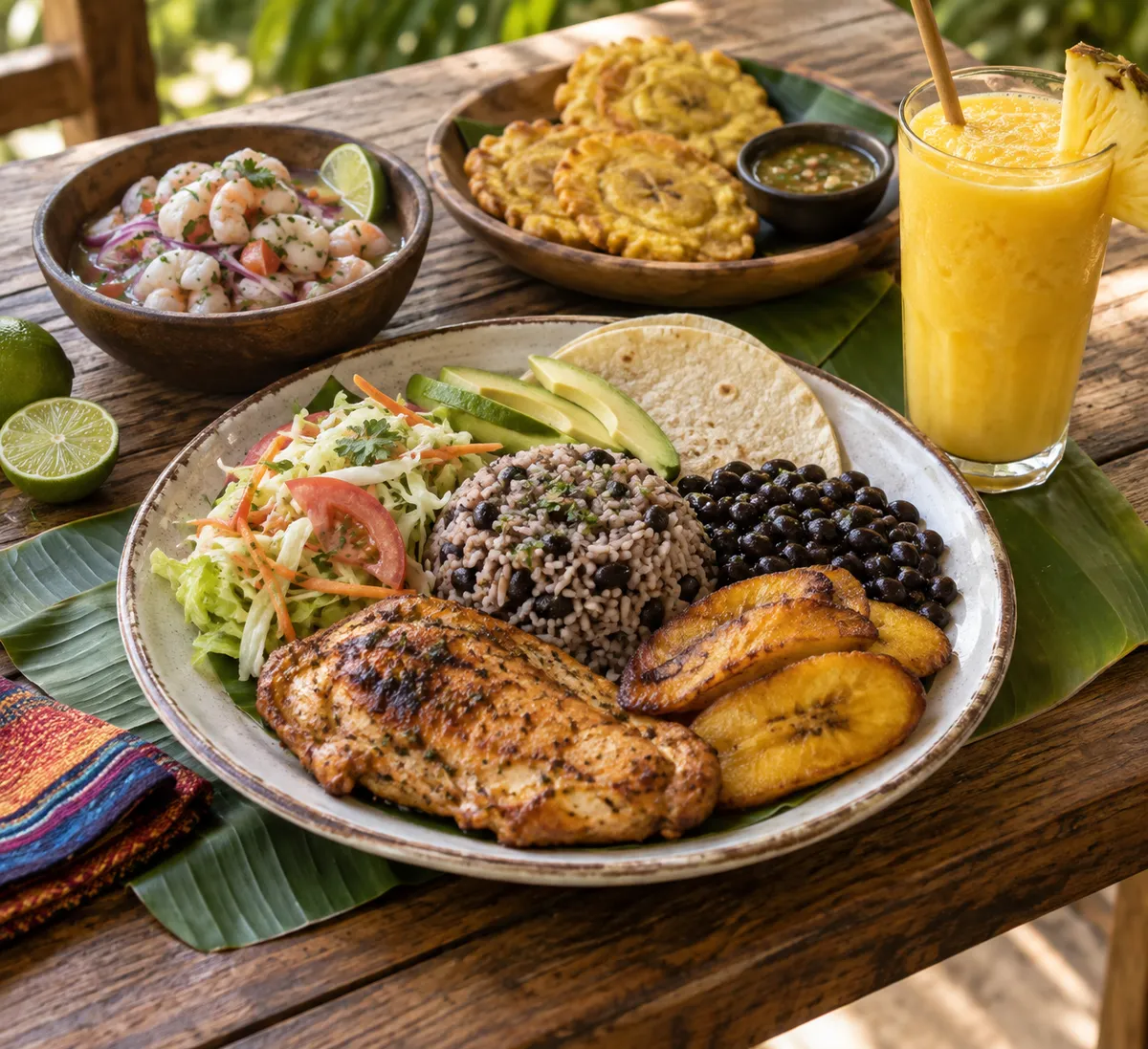
Afar's roundup of 12 must-eat Costa Rican foods makes a case that the country's cooking is simple, fresh, and tied closely to place. The version of that list we can vouch for here has seven dishes: ceviche, gallo pinto, patacones, heart of palm salad, batidos, rice and beans, and casado. Use it as a first-trip eating plan: what each one is, where it fits in your day, and what it tells you about where you are.
The thread running through all of them, per Afar, is local ingredients. The piece credits Costa Rica's biodiversity, regional traditions, and farm-to-table culture for a cuisine that doesn't need much fuss. That's a useful lens when you're standing at a menu: ask what's local, and order that.
Start with the plate that defines lunch: casado
If you only learn one menu word, make it casado. It's the kind of meal you'll find on the menu at casual, local-style restaurants, and it works as a sampler of everyday Costa Rican eating on one plate. Order it when you're not sure what you want, or when you'd like to taste several traditional elements at once.
A practical move: ask what the day's protein options are, then let the rest of the plate come as it comes. You're eating the way the locals do at midday.
Eat gallo pinto in the morning
Gallo pinto is one of the dishes Afar puts at the center of Costa Rican food. Treat it as a breakfast anchor: it's rice and beans, and it's the dish you'll want to try early in your trip so everything else has a baseline.
The interesting part comes later. Gallo pinto is worth comparing with the rice and beans you'll find on the Caribbean side, which is a different dish with its own regional identity.
Order rice and beans on the Caribbean coast
Afar lists Caribbean rice and beans separately from gallo pinto, and that's the point: the same two ingredients, a different tradition. If your route includes the Caribbean coast, make a point of ordering it there rather than defaulting to gallo pinto out of habit.
This is the easiest way to taste regional difference in Costa Rica. Eat both within a few days and notice what changes.
Eat ceviche where the seafood is fresh
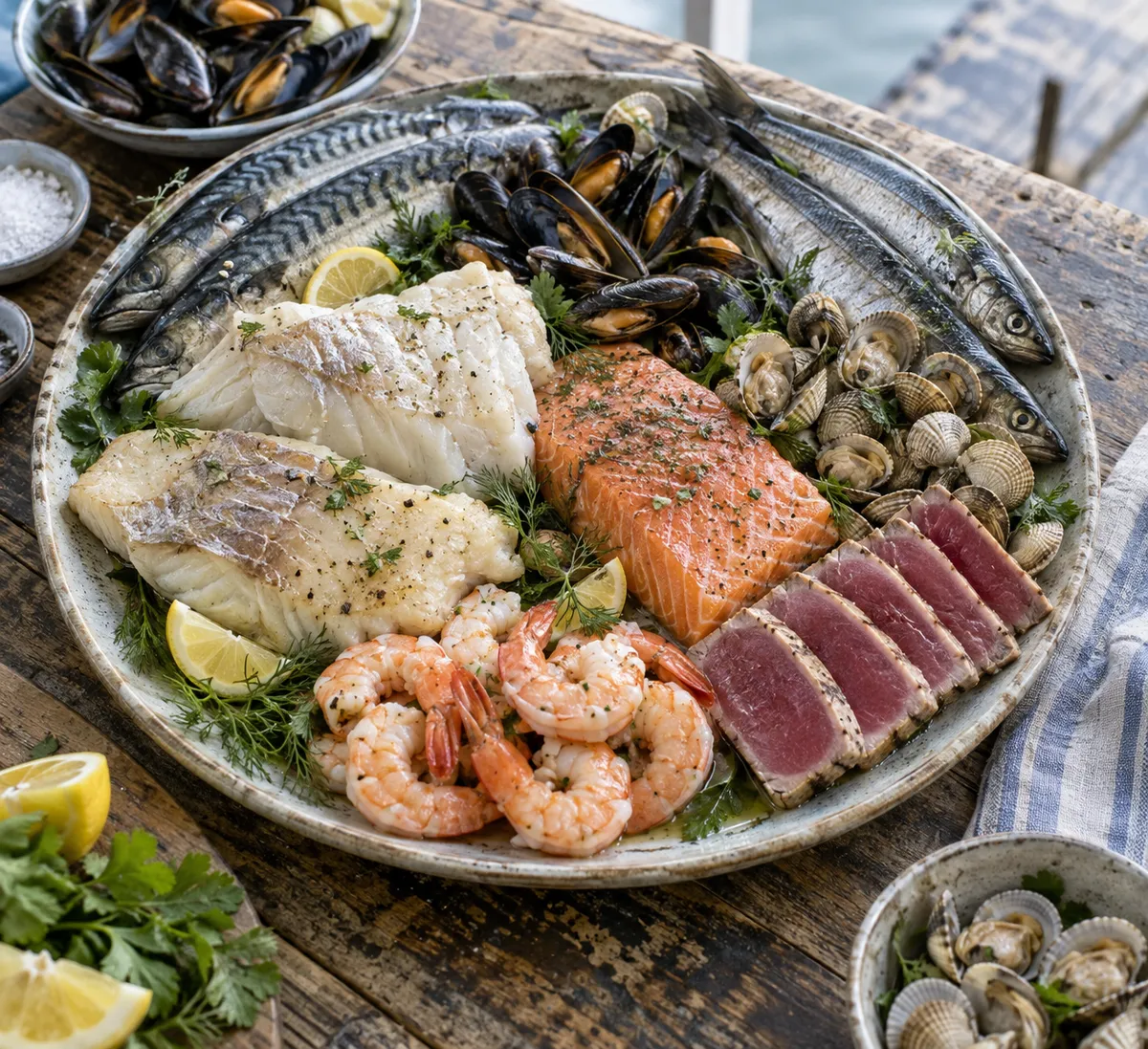
Ceviche is the seafood headliner. Afar points to fresh seafood as one of the country's essential flavors, and ceviche is the dish where freshness is the whole story, since there's little else on the plate to hide behind.
How to approach it:
- Order it near the coast, where the seafood is closest to its source.
- Eat it as a starter or light lunch, especially in warm weather.
- Treat it as a place-based dish: the fish and the setting do most of the work.
Snack on patacones
Patacones are the fried snack in the lineup, and the easiest one to add to any day. They suit a beach stop, a casual lunch, or a shared table where you want something to pick at while the main dishes arrive.
Because they're a snack rather than a meal, they're a low-risk way to start trying things. Order them alongside whatever else you're eating and see how they pair.
Try heart of palm salad for something fresh and plant-led
Heart of palm salad is the lighter pick on the list, and a good counterweight to fried snacks and rice-heavy plates. If you've had a few days of casado and patacones, this is the order that resets the table.
It also fits the farm-to-table story Afar emphasizes: a dish built on an ingredient from the land rather than on technique.
Drink a batido
Batidos are the fruit-packed drinks Afar highlights, and they're the simplest way to taste the country's produce. Think of them as fruit smoothies, ordered any time you'd otherwise reach for a soda or bottled juice.
A good rule: choose the fruit you can't easily get at home, or the one that looks most local at the stand or café. The point is to let the biodiversity do the talking.
A simple eating plan
If you want to eat these seven in order without overthinking it:
- Morning: gallo pinto.
- Midday: casado, or ceviche if you're by the coast.
- Afternoon: patacones and a batido.
- Evening: heart of palm salad as a lighter plate.
- On the Caribbean side: swap in rice and beans for gallo pinto.
Why this simple food sticks
Afar frames the cuisine as simple, fresh, and deeply place-based, and that's the real reason to eat this way. None of these dishes need a reservation or a plan. They need you to order what's local, where it's local, and pay attention.
On your first day, skip the menu you recognize and order the casado.